
As Seth Godin shares, once applied, labels make it impossible to see what lies beneath. When the world changes, our labels may cease to function, leaving us blind to opportunities presenting themselves.
If you had a different name, who would you be? Imagine the freedom that might come from not having to live up to everything attached to the label, that word, your name.
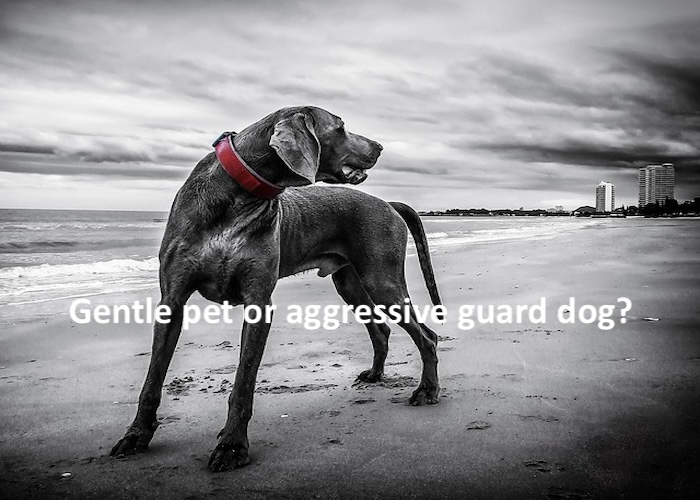
Consider the image of the dog above; some may label the dog as a threat, something to fear, while others may see an amazing pet to be loved. The labels we attach to the dog will influence our behavior, and more often than not, the outcome = the dog living up to our expectations.
Bonita, a loving wife & loyal friend, or an opinionated, stubborn & selfish human? Like most humans, I am aspects of all of these wrapped in a bundle of emerging humanity.
However, it’s the labels I identify with most, the ones I firmly believe (even though these may only constitute 10% of my make-up) that matter most. These are the ones that will define everything I think, say, do, and, as a result, experience. Think about the woman with the amazing body who identifies strongly with the “overweight” label because once, in junior school, someone, who she probably doesn’t even know anymore, said something about her weight.
When the labels you have chosen to identify with are positive, encouraging, and motivating, great. Sadly, though, many of us are far more inclined to cling to and hang around with the less motivating, darker labels ie. I am not as good as ……., I don’t have what it takes, I am just a …….etc, etc, etc. Right?
Do any personal favourites come to mind? 🙂
What’s wrong with us humans?
Now, despite labels being an ingrained human characteristic with several positives, they also have definite shadows we seldom consider. It’s this denial that, over time, becomes our prison, leaving us living limited lives of survival rather than thriving.
So, let’s take a moment to consider the good, the bad, and the ugly of labels.
The good
In the most basic way, the use of labels helps to filter all the information coming at us all day. They help us understand our social environment, offering shortcuts to identifying and categorizing ourselves and others. Some labels might give us a sense of belonging to a group of people where we experience a feeling of sameness and familiarity.
The use of labels further assists us in understanding our behaviour and personality more deeply, leading us to describing ourselves as introvert or extrovert, as risk averse or impulsive, as materialistic or spiritual.
Not all bad right.
The bad
We assume that because labels make us feel comfortable they also keep us safe.
Mistake. That assumption is a mistake. Some labels make life easier to process however, easier to process does not necessarily = SAFE.
Safe is not thriving, safe normally only = surviving. Survival is a good thing, don’t get me wrong. However, were you born only to survive? Once the basic survival labels are in place we need to start questioning the ones that are not attached to a can. In fact we should even question the ones on cans these days 😂.
It may feel safe to cling to only the label of Mother at the cost of embracing other aspects of yourself. Like the artist trapped under the “Mother label” because “Mother” would not run around barefoot on the beach, wide-eyed with delight, painting the ocean beside a group of “hippie looking” strangers drinking carafes of wine while swaying joyfully to the rhythmic beat of a drum.
Outdated, still bad
You see, we have been so well trained to prefer the safety of being right based on outdated labels rather than question the ongoing relevance of certain labels. Does Mother mean irrelevance and death of the barefoot artist? Is this the truth?
In fact the most important question to ask is “Is this MY truth”? Because it’s YOUR truth that either confines your dreams or sets them free. A truth inspected, considered, questioned, and held lightly because truth has a way of evolving as our eyes open and the lenses of indoctrination peel away.
Labels have a way of making us feel that we need to be perfectly one thing or another rather than the colorful, contrasting, crazy, messy combinations of so many beautiful things all at the same time.
Then this madness sadly spreads. Yes, it’s not only the “I” that is subject to this labeling limitation. No, if we are to suffer under the weight of these labels others should, too. So we extend our labeling to others, just as it happened to our parents and theirs before them.
Once we are attached to the labels we have given others, particularly significant others or our children, heaven forbid if they dare behave in ways that contradict our safe & predictable labels. We cast our eyes to the heavens, glancing at the closest human with an expression that communicates our extreme disappointment. How very dare they? How could they do this to us? If they don’t predictably live up to their labels what does it mean for us?
We want a place to hide, and labels provide a great hiding place, something we can count on. Without them, our lives feel unpredictable and unsafe. We are left vulnerable to what others may say or think, and that just won’t do, so we put every effort into squeezing the squirming and squealing “I”, him or her, back into that well-labeled, safe, acceptable box at all costs. We seldom consider the weight of this cost until it’s too late.
The ugly
Because it’s easier to stubbornly cling to outdated labels, we avoid having to commit to a new way of thinking. Labels allow us to keep doing what we have always done. To keep thinking about life, situations, and people the way we always have. They justify our excuses and excuse the death of our dreams, even if only publicly. Leaving us slowly dying on the inside, behind the shiny, socially accepted label.
Labels are barriers to connection, keeping us safely on this side of the fence when the real possibilities and opportunities are on the other side. Labels fail to capture the complexity, diversity, beauty, and magic of being human. They have the potential to reinforce negative stereotypes, contributing to ongoing discrimination, oppression, and destroyed dreams.
Stereotyping occurs when ‘all addicts’ are viewed in a particular way, such as being ‘untrustworthy’ or all “parents” are viewed as having to “grow up and stop living in their imaginations.” How sad, our imaginations are where our dreams are born, where our purpose lives waiting to be discovered. Never surrender your imagination! Never!
Remember, though, that imagination ≠ daydreaming. Imagination requires active participation, whereas daydreaming is a passive pass time not encouraged when planning a purposeful future 😁.
My label dilemma
I am currently being strongly challenged by the well-established, deeply entrenched “age label”. You know, the one that confidently tells us what can and can’t be done at various age-demarcated periods.
I have always believed myself to be quite an “anti-the whole age-related what is and what is not” appropriate rebel, so I have been surprised at just how deeply ingrained some things are. I am currently considering a project and keep finding myself face to face with the “at your age should you be considering this” finger-pointing of the “age label.” Can you believe it? Seriously? I believe one can do anything one wants irrespective of age, or at least that’s what I thought until now 😳.
So, I am currently having a little heart-to-heart with “this label’s view of me and what I can and should or should not be doing,.” What I am discovering is that the label’s job is essentially masking a whole bunch of excuses, all seemingly underpinned by fear. The label only wants to keep me safe, predictable, and surviving. Unfortunately, I have not discovered any encouragement hidden beneath the label, only universal consensus. However, I realize that I do not need to live with this label, I can shed it, look it in the face, and say “Thank you for doing your job, however right now, I will be parking you because the road I am going on does not require you”.
Is it simple to shed a deeply ingrained, largely universally accepted label? No, I have to rip at it daily, focus on the possibilities, hold the fear lightly, and dig deep for the courage to keep moving forward. It’s exciting, liberating, and damn scary at times because, remember, labels keep us safe, and according to the label, I should be slowing down and getting ready for retirement. For heavens sake Bonita, only Gen Z’s do what you are thinking about. That is when I yell back and firmly remind the “label” that I am a perennial, “curious, creative, open-minded, and not limited by traditional notions of age”.
Now that you know
Stubbornly clinging to worn-out labels is highly overrated, and the art of moving toward your dreams lies in understanding what needs to be left behind. Questioning labels is important when we choose to pursue our dreams, make a difference, and challenge the status quo. Labels often have to be entirely surrendered to discover the freedom hiding behind them.
Now, when it comes to a fork, spoon, plate, or plant, it may not serve us to call them ducks, rabbits, or cats.
Essentially, allow labels to serve their intended purpose; do not allow them to imprison you.
Are you willing to surrender your desire to interpret events in ways that allow you to retain your labels, noticing what happens when your possibly biased and flawed labels are removed for just a moment? A new truth may just reveal itself in that magical moment.
“Labels are for cans, not people” – Anthony Rapp